


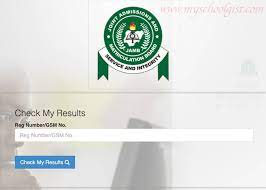
Is JAMB Result 2026 Out – Check My JAMB Result
JAMB Result 2026/2026 – Is JAMB Result Out? Yes JAMB has announced the release of 2026 UTME Result. The Joint Admissions and Matriculation Board has officially published the result of candidates who wrote the examination.
JAMB has released the result of 2026 candidates. Aspirants who wrote their UTME which commenced on 6th May, can now login to JAMB Admission portal and check their scores. JAMB Portal is www.jamb.gov.ng.
If you to see your JAMB Result 2026, then you have read further and follow every guidelines we have here in other your Check Your Result. Please be informed, checking of your result on JAMB E-Facility Portal is free of charge.
Now, before we proceed, make sure you know about the JAMB Cut Off Mark for the University or Polytechnic you want to get admission into. Once, you have been able to check your UTME Result, then move ahead to check what is the minimum cut off mark for your course of study.
It is very easy to access JAMB Result 2026 on the portal, we have already told you from JAMB Latest News, that the result has now been uploaded on portal.jamb.gov.ng and you can check the JAMB Result with your phone.
Related Posts:
- Busting Myths About Studying Abroad
- TOEFL Exam 2026
- 25 Scholarships in USA
- Top 10 Scholarships in Italy for International Students
- Top 10 Prestigious Scholarships for the Best Students
- 35+ International Scholarships for Development-Related Studies
- 15+ Tuition Fee Scholarships offered by Universities for International Students
- 10 Distance Learning Scholarships & Tuition
- Top 10 International Scholarships for Women
- 10+ Scholarships in Australia for International Students
- Top 50 International Scholarship Programs Offered Annually
- Top 10 Science, Engineering, Technology Scholarships for Foreign Students
- Top 15 Bachelor’s Degree Scholarships for International Students
- Top 10 International Scholarships for African Students
- ICSP Scholarships at University of Oregon USA
- University of Manitoba Graduate Fellowships
- MBA: Admission, Courses, Colleges, Fees
- Simmons University Kotzen Scholarships 2026
- USA Scholarships 2026-2026
- Fulbright Scholarship 2026
- Stanford University Scholarships 2026
- Yale University Scholarships 2026
- Performance and Elite Sport Scholarships 2026
How to Check My JAMB Result 2026
T
How to Check Your JAMB Result: A Comprehensive Guide
Checking your Joint Admissions and Matriculation Board (JAMB) Unified Tertiary Matriculation Examination (UTME) result is a crucial milestone for every candidate in Nigeria. While the process is designed to be straightforward, it can sometimes feel daunting due to network congestion or confusion regarding the official portals.
This guide provides a step-by-step walkthrough to ensure you can access your result quickly and accurately.
Important Prerequisites
Before you attempt to check your result, ensure you have the following ready:
-
Your JAMB Registration Number: This is the most critical piece of information.
-
A Reliable Internet Connection: Slow or intermittent connectivity can lead to errors.
-
A Compatible Device: A smartphone, tablet, or computer with a standard web browser (Chrome, Safari, or Firefox are recommended).
Method 1: Using the JAMB Official E-Facility Portal (Recommended)
The most reliable way to check your result is through the official JAMB portal. Follow these steps:
-
Navigate to the Portal: Visit the JAMB E-Facility Portal.
-
Log In: Enter the email address and password you used during your registration.
-
Locate the Result Tab: Once logged in, look for the box labeled “Check UTME Results” on your dashboard.
-
Access the Result: Click on the tab. Your result should be displayed on the screen.
-
Print/Save: If you wish to keep a physical copy, use the print icon or save the page as a PDF for your records.
Method 2: The SMS Method (Offline)
If you are experiencing issues with the web portal, JAMB provides an SMS alternative. Note: This method usually incurs a small network service charge (deducted from your airtime).
-
Open your Messaging App: Use the phone number you linked to your JAMB profile.
-
Compose a New Message: Type “UTME RESULT” (without quotes).
-
Send to 55019: Send this message to the official shortcode 55019.
-
Receive Your Result: JAMB will send an automated response to your phone containing your result details shortly after.
Troubleshooting Common Issues
If you are unable to view your results, consider these common solutions:
-
“Result Not Found”: This often occurs if you are checking too early or if your center experienced technical issues. Wait a few hours and try again.
-
Invalid Login Credentials: If you have forgotten your password, use the “Forgot Password” link on the JAMB E-Facility login page to reset it via your linked email.
-
Network Congestion: During peak periods when thousands of students are checking simultaneously, the servers may slow down. If the page fails to load, refresh after a few minutes or try during off-peak hours (e.g., late at night or very early in the morning).
-
SMS Not Sending: Ensure you have enough airtime on your phone. Also, ensure your number is the one originally used for your JAMB profile.
Next Steps After Checking Your Result
Once you have your result, your journey toward university admission truly begins:
-
Check Admission Status: Keep an eye on the JAMB CAPS (Central Admission Processing System) portal, where your admission status will eventually be updated.
-
Upload O’Level Results: Ensure your WAEC, NECO, or NABTEB results are uploaded to the JAMB portal via a CBT center, as your admission is contingent upon this.
-
Monitor University Post-UTME: Stay updated with your chosen institution’s official website for information on their specific Post-UTME screening requirements.
Disclaimer: Always use official channels. Beware of third-party websites claiming to offer “result upgrades” or “special access.” These are fraudulent activities that can compromise your data and lead to disqualification. Only trust information found on
jamb.gov.ng
Related Posts:
- Busting Myths About Studying Abroad
- TOEFL Exam 2026
- 25 Scholarships in USA
- Top 10 Scholarships in Italy for International Students
- Top 10 Prestigious Scholarships for the Best Students
- 35+ International Scholarships for Development-Related Studies
- 15+ Tuition Fee Scholarships offered by Universities for International Students
- 10 Distance Learning Scholarships & Tuition
- Top 10 International Scholarships for Women
- 10+ Scholarships in Australia for International Students
- Top 50 International Scholarship Programs Offered Annually
- Top 10 Science, Engineering, Technology Scholarships for Foreign Students
- Top 15 Bachelor’s Degree Scholarships for International Students
- Top 10 International Scholarships for African Students
- ICSP Scholarships at University of Oregon USA
- University of Manitoba Graduate Fellowships
- MBA: Admission, Courses, Colleges, Fees
- Simmons University Kotzen Scholarships 2026
- USA Scholarships 2026-2026
- Fulbright Scholarship 2026
- Stanford University Scholarships 2026
- Yale University Scholarships 2026
- Performance and Elite Sport Scholarships 2026
Jamb CBT Practice Questions And Answers
Mastering the JAMB CBT: A Comprehensive Guide to Practice and Preparation
The Joint Admissions and Matriculation Board (JAMB) Unified Tertiary Matriculation Examination (UTME) is a crucial milestone for students aspiring to gain admission into Nigerian tertiary institutions. Because the examination is strictly Computer-Based Testing (CBT), success depends not only on your subject mastery but also on your familiarity with the digital environment and your ability to manage time effectively.
This guide outlines how to leverage practice questions and answers to maximize your score.
The Strategic Value of Past Questions
Practicing with past questions is perhaps the most effective way to prepare for the JAMB UTME. It offers three distinct advantages:
- Pattern Recognition: JAMB often repeats question patterns and topics. By solving past questions, you identify the recurring core concepts in subjects like Mathematics, Physics, Chemistry, Biology, and English Language.
- Time Management Training: The CBT interface has a countdown timer. Practicing with full-length past questions helps you develop the speed necessary to answer 180 questions within the allotted time.
- Psychological Readiness: Familiarity reduces anxiety. Knowing how the interface works—how to select answers, flag questions, and navigate between subjects—ensures you focus on the content, not the software, on exam day.
How to Structure Your Practice
To get the most out of your preparation, move beyond simply “reading” questions. Follow this structured approach:
- Simulated Testing Environment
Do not just look at questions in a textbook. Use software or apps that simulate the actual JAMB CBT interface. This forces you to interact with the screen exactly as you will during the real exam.
- The “Active Recall” Method
- Attempt First: Cover the answer key and attempt to solve the question independently.
- Analyze Errors: If you get a question wrong, do not just memorize the correct option. Read the detailed explanation (which many CBT apps now provide) to understand the underlying principle.
- Review Syllabus: If you consistently fail a specific topic (e.g., “Stoichiometry” in Chemistry), step back and review your primary textbooks before returning to the practice questions.
- Subject-Specific Focus
- English Language: Focus on the Comprehension, Lexis and Structure, and the recommended Literature text.
- Core Sciences: Prioritize solving numerical problems. Practice calculating quickly without excessive rough-work usage, as the interface provides limited space.
- Social Sciences/Arts: Focus on timelines, historical figures, and key theories, as these are frequently tested in objective form.
Recommended Tools for Practice
To maximize your efficiency, utilize the following types of resources:
- Official JAMB Mobile App/Software: Always prioritize resources that mimic the official layout.
- Accredited CBT Centres: Many physical centers offer “mock” CBT sessions. Taking at least one mock exam in a physical center can help you get accustomed to the environment.
- Standardized Question Banks: Look for materials that provide not just the correct option, but also the step-by-step solution. Understanding why an answer is correct is more important than knowing what the answer is.
Common Pitfalls to Avoid
- Relying Solely on “Expos”: Avoid the trap of searching for leaked questions. These are often unreliable and distract you from building the actual knowledge required for long-term success.
- Ignoring the Syllabus: Use the official JAMB syllabus alongside your practice questions. The syllabus tells you exactly what topics are covered; the practice questions show you how those topics are framed.
- Neglecting Time Constraints: Even if you know the answer, if you take 5 minutes to solve it, you will fail the exam. Always time your sessions.
Summary Checklist for Success
| Step | Action Item | Goal |
| 1 | Download the JAMB Syllabus | Define the scope of your study. |
| 2 | Install a reputable CBT Practice App | Simulate the exam interface. |
| 3 | Take a “Diagnostic” Test | Identify your strong and weak subjects. |
| 4 | Daily Timed Practice | Build speed and accuracy. |
| 5 | Review Mistakes | Deepen conceptual understanding. |
By treating your practice sessions as a structured training program rather than just “reviewing,” you move from passive reading to active mastery. Consistent practice in a simulated environment is the surest pathway to securing a high score in the UTME
How To Do Reprinting Of Jamb Slip
Comprehensive Guide: How to Reprint Your JAMB Examination Slip
For any candidate participating in the Joint Admissions and Matriculation Board (JAMB) Unified Tertiary Matriculation Examination (UTME), the Examination Slip is the most critical document you must carry to the exam center. It serves as your official “entry ticket,” containing vital information such as your exact examination date, designated Computer Based Test (CBT) center address, and scheduled session time.
This guide provides a comprehensive, step-by-step walkthrough for reprinting your JAMB slip securely and effectively.
Why You Must Reprint Your Slip
Even if you kept a copy during your registration, reprinting your slip closer to the exam date is essential because:
- Final Confirmation: JAMB may occasionally adjust schedules or centers. Your most recently printed slip reflects the absolute latest information.
- Verification: It ensures you have a clean, readable copy for the invigilators.
- Preparation: Knowing your exact center and time allows you to plan your logistics (travel, arrival time) to avoid being late.
Official Requirements
To access your slip on the official JAMB portal, you will need:
- JAMB Registration Number: The unique number issued to you during your registration.
- Registered Details: You may be asked for the phone number or email address associated with your JAMB profile.
- A Stable Internet Connection: Ensure you have a reliable network to avoid page timeouts.
- A Printer/Device: Access to a computer and printer, or a smartphone capable of saving the slip as a PDF.
Step-by-Step Procedure to Reprint
Method 1: Using the Dedicated Slip Printing Portal (Recommended)
This is the fastest and most direct method for candidates.
- Visit the Official Portal: Navigate to the Official JAMB Slip Printing Portal.
- Input Your Details: In the required field, type your JAMB Registration Number, Phone Number, or Email Address exactly as they appear on your profile.
- Search/Print: Click the “Print Examination Slip” button.
- Save as PDF: If you are using a phone, the browser will likely open a preview. Use the “Print” or “Save as PDF” function to save the file to your device.
- Print a Hard Copy: Take the PDF file to any local cybercafé or business center to print it out.
Method 2: Via the JAMB e-Facility Dashboard
If the dedicated printing portal is congested, you can access the slip through your personal JAMB profile.
- Log In: Go to jamb.gov.ng.
- Enter Credentials: Sign in using your registered email and password.
- Locate Service: Look for the tab labeled “Print UTME Main Examination Slip” or “Examination Slip Printing.”
- Download: Once the document loads, download it immediately for printing.
Important Tips for Exam Day
- Print Multiple Copies: It is advisable to print at least two copies. Keep one in your bag and one in your file. Having an extra copy is a smart safety measure.
- Clear Quality: Ensure the printed copy is clear, especially your photograph and the exam center details. If the ink is faded, it may cause issues at the verification desk.
- Avoid Third-Party Scams: Never pay unofficial websites or individuals to “unlock” or “generate” your slip. The official reprinting process is free. Any service fees you pay at a cybercafé are strictly for the physical printing/photocopying service, not for the document itself.
- Check Regularly: If you are unsure about your schedule, check the portal a few days before your exam to ensure no changes have been made.
Troubleshooting Common Issues
- “Portal Not Loading”: The JAMB portal experiences high traffic during the peak exam window. If the page is slow or unresponsive, try accessing it during off-peak hours, such as late at night or very early in the morning.
- “Details Not Found”: Double-check that you are using the exact registration number or the phone number you used for your JAMB profile. If you have recently performed a change of data (like a change of course or institution), it may take a few days for the system to reflect the most current information.
- Pop-up Blockers: If you click “Print” and nothing happens, your browser may be blocking pop-ups. Check your browser settings and allow pop-ups for the JAMB website.
Disclaimer: Always ensure you are on the official JAMB domain (jamb.gov.ng). Always verify your exam schedule directly through official channels to ensure you are fully prepared for your test.
Jamb Cut-Off Marks
Jamb Cut-Off Marks
Understanding JAMB Cut-Off Marks: A Comprehensive Guide for Nigerian Students
For millions of Nigerian students, the Joint Admissions and Matriculation Board (JAMB) Unified Tertiary Matriculation Examination (UTME) represents the gateway to higher education. Central to the anxiety and excitement surrounding this process is the “JAMB cut-off mark.”
Understanding how these marks function is critical for any student aiming for a stress-free admission process. This guide breaks down what they are, how they work, and how they impact your journey into a Nigerian university, polytechnic, or college of education.
What is a JAMB Cut-Off Mark?
In simple terms, a cut-off mark is the minimum score a candidate must achieve in the UTME to be eligible to participate in the admission screening exercise of a specific tertiary institution.
It is important to distinguish between two types of cut-off marks:
- The “National” Minimum Cut-Off Mark: Every year, during the policy meeting chaired by the Minister of Education, JAMB and heads of institutions set a baseline score for the entire country. This serves as a “floor”—no institution is legally allowed to admit students who score below this threshold.
- Institutional/Departmental Cut-Off Marks: These are scores set by individual universities, polytechnics, and colleges of education. While they cannot be lower than the national minimum, they are often significantly higher based on the institution’s prestige, the popularity of the course, and the volume of applicants.
The Factors That Influence Cut-Off Marks
Why does one school set a cut-off of 140 while another sets it at 250? Several variables dictate these numbers:
- Course Competitiveness: Courses like Medicine and Surgery, Law, Pharmacy, and Computer Science are highly sought after. Consequently, departments for these courses often set very high cut-off marks to prune down the massive number of applicants.
- The “carrying Capacity” of the Institution: Every school has a quota mandated by the National Universities Commission (NUC). If a university can only admit 50 students into a specific department, they will naturally set a higher cut-off mark to ensure they select only the top-performing candidates.
- Performance of the Cohort: If a particular year’s UTME results are generally low, schools might adjust their cut-off marks slightly downwards to ensure they have enough candidates to fill their quotas. Conversely, if students perform exceptionally well, marks may rise.
- Catchment Area and ELDS (Educationally Less Developed States): Many federal institutions apply a quota system that considers the candidate’s state of origin. Sometimes, candidates from designated ELDS may have lower departmental cut-off requirements compared to those from more educationally advantaged states.
The Admission Process: It’s Not Just JAMB
A common misconception is that the UTME score alone guarantees admission. In reality, the final decision is a composite score.
Most institutions use the following formula (or variations of it) to determine who gets a seat:
$$\text{Admission Score} = \frac{\text{UTME Score}}{8} + \text{Post-UTME/Screening Score}$$
Note: Some schools may also include a weighted percentage for O’Level (WAEC/NECO/NABTEB) results.
Because of this, a high JAMB score provides a massive safety net. Even if you perform average in your Post-UTME, a strong UTME score can keep you above the merit line.
Strategic Steps for Candidates
To navigate the cut-off mark system effectively, keep the following in mind:
- Research Your Target Institution
Before applying, visit the official website of your target school or check their official bulletin. Do not rely on hearsay or old forum posts, as cut-off marks can change annually.
- Know the Difference Between Merit and Catchment
- Merit: Admissions based purely on your performance.
- Catchment: Admissions reserved for candidates from states geographically close to the institution.
- ELDS: Admissions reserved for states with lower educational representation.
Understand which category you fall into to manage your expectations.
- Aim Well Above the Minimum
Never aim for the cut-off mark. If a school’s cut-off is 200, aiming for 200 puts you in a precarious position where one bad day during the Post-UTME could cost you admission. Always aim for a score 30–50 points higher than the historical cut-off to ensure you remain competitive.
- Watch for Change of Course
If you perform below the cut-off for your chosen course, many institutions will offer a “Change of Course” form. This allows you to switch to a less competitive program within the same school rather than losing your chance at admission entirely.
Summary Table: Typical Expectations
| Institution Type | Typical UTME Cut-Off Range | Factors to Consider |
| Federal Universities | 180 – 250+ | Highly competitive; merit-based. |
| State Universities | 160 – 220 | Varies; often considers state of origin. |
| Polytechnics | 120 – 160 | Generally lower; emphasizes technical skills. |
| Colleges of Education | 100 – 140 | Often the most accessible entry point. |
Conclusion
The JAMB cut-off mark is not a barrier designed to stop you; it is a filter designed to manage the high demand for limited university seats. By understanding the criteria, researching your chosen institution’s history, and preparing diligently for both the UTME and your Post-UTME, you can master the system and secure your spot in a tertiary institution.