
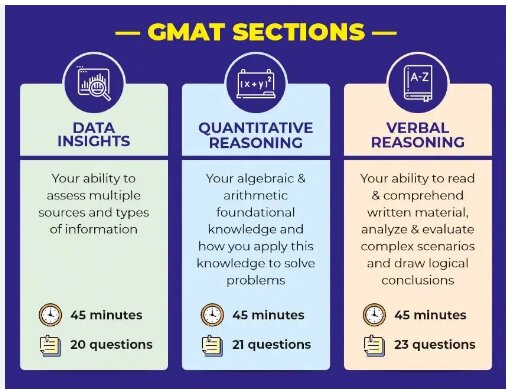
GMAT Scholarships for Indian Students: A Comprehensive Guide to Financing Your MBA
For many Indian students, pursuing an MBA at a top-tier business school is a transformative career milestone. However, the financial commitment—covering tuition, living expenses, and relocation—can be substantial. Fortunately, a strong GMAT score acts as a powerful catalyst for securing financial aid. While the GMAT does not award scholarships directly, it is a primary criterion used by business schools and external organizations to evaluate candidates for merit-based funding.
- GMAT Colleges
- How to improve your GMAT scores to get into better colleges
- GMAT Score for MBA in Canada
- New GMAT Feature Allows Students To Choose The Order Of Sections
- New Feature on GMAT: Preview Your Scores
- Top Strategies for Getting a Perfect 800 GMAT Score
This article provides a comprehensive overview of how Indian students can leverage their GMAT performance to secure scholarships, both in India and abroad.
Understanding “GMAT Scholarships”
It is essential to clarify that a “GMAT scholarship” is not a separate entity; rather, it is a merit-based financial award where your GMAT score serves as a critical filter for eligibility. Admissions committees view high GMAT scores as an indicator of academic readiness, analytical aptitude, and discipline—all qualities highly valued in MBA cohorts.
Types of Scholarships Available
-
Merit-Based Scholarships: Awarded primarily based on your GMAT score, academic record, and professional achievements. These are the most common awards for high scorers.
-
Need-Based Scholarships: Granted to students who demonstrate financial necessity. While need is the core driver, a strong GMAT score can significantly strengthen your application, making you a more competitive candidate for these limited pools.
-
Diversity/Special Interest Scholarships: Targeted at underrepresented groups, women in leadership, or candidates from specific backgrounds. A high GMAT score in these categories often increases your chances of selection.
-
External Fellowships: Offered by foundations, NGOs, and corporate entities independent of the university. These often have distinct application processes and criteria.
Strategic GMAT Scoring for Scholarships
While there is no “magic number” that guarantees funding, scores in the upper percentiles significantly enhance your chances.
| GMAT Score Range | Scholarship Probability | Typical Context |
| 650–680 | Limited | Possible small/partial awards at select institutions. |
| 700–730 | Competitive | Strong eligibility for merit-based awards at most top global/Indian programs. |
| 740+ | High | Strong contender for major fellowships, full-tuition, or full-ride awards. |
Note: Admissions committees look at the “whole person.” A high GMAT score must be complemented by a strong professional profile, clear career goals, and leadership experience.
Top Scholarship Avenues for Indian Students
1. International Opportunities
Elite global business schools offer substantial scholarships to attract diverse, high-caliber talent from India.
-
Full/High-Value Funding:
-
Stanford GSB Knight-Hennessy Scholars: Offers comprehensive funding for the duration of graduate studies.
-
Oxford Saïd Skoll Scholarship: A prestigious, full-funding opportunity for social entrepreneurs.
-
Cambridge Judge Boustany Scholarship: Covers a significant portion of tuition (up to 75%).
-
-
Merit-Based Fellowships:
-
INSEAD: Offers various merit and diversity scholarships, often requiring a GMAT score of 700+.
-
London Business School (LBS): Renowned for merit scholarships, including the competitive Laidlaw Scholarship.
-
US M7 Schools (Wharton, Booth, HBS, etc.): These institutions provide substantial fellowships, with top awards often favoring candidates scoring 720+.
-
2. India-Specific External Funding
Indian students can combine university-level merit awards with external scholarships designed for Indian citizens studying abroad.
-
JN Tata Endowment: Provides loan scholarships for higher studies abroad.
-
Inlaks Shivdasani Foundation: Offers generous funding for students pursuing competitive programs globally.
-
Narotam Sekhsaria Foundation: Provides interest-free loans for postgraduate studies.
-
Fulbright-Nehru Fellowships: Highly prestigious full-funding awards for study in the USA.
3. Scholarships at Top Indian B-Schools
Top Indian institutions like the Indian School of Business (ISB), SPJIMR, and certain IIMs (for 1-year/Executive programs) accept GMAT scores and offer merit-based tuition waivers. At ISB, for instance, scholarship evaluation is a holistic process where the GMAT score is a vital component alongside work experience and leadership potential.
- Business Schools without GMAT requirement
- MBA Colleges in Australia that don’t Require GMAT
- MBA in Australia without GMAT FAQs
- GMAT Sample Papers
Actionable Tips to Maximize Your Chances
-
Aim High, Early: Aim for a GMAT score that is at or above the class average of your target schools. The earlier you apply (ideally in Round 1), the more scholarship funds are generally available.
-
Highlight “Impact” in Essays: Admissions committees look for leaders. Use your scholarship essays to articulate not just your past achievements, but your potential to contribute to the school community and your post-MBA impact on industry or society.
-
Leverage Your Professional Profile: Connect your GMAT score to your professional successes. If you scored high on the Quant section, emphasize your data-driven decision-making in your career.
-
Research Extensively: Many scholarships have different deadlines than the admission application. Create a tracker for all relevant deadlines and specific requirements.
-
Submit Professional Recommendations: Ensure your letters of recommendation (LORs) come from mentors who can provide concrete examples of your leadership, which adds weight to the analytical aptitude demonstrated by your GMAT score.
Otherthings You Need To Know; www.gmac.com

All the students who apply for an international MBA want to try their luck in getting any kind of scholarship. In this article, we will inform you about the GMAT scholarships and MBA scholarships for Indian students. The scholarship can vary from one form to another. However, there are no specific criteria that guarantee a scholarship or financial assistance. Scholarships or grants can be need-based or merit-based and as the opportunities are limited, it is recommended to apply early. From getting a high GMAT score to applying early, there are a lot of criteria that one needs to fulfil in order to be eligible for a GMAT scholarship for pursuing a good MBA program.
Students with average or low GMAT scores can also hope of getting a scholarship, depending on he/she must have something concrete to showcase to the admissions committee. The low GMAT score can be compensated with any achievement in sports or any extracurricular activity or anything impressive which sets the candidate apart from other applicants. Students generally have a perception that getting a 750 GMAT score or higher is enough for winning a scholarship. However, getting a scholarship based on a GMAT score may not be possible as schools look at the bigger picture and give consideration to the complete profile of the candidate. Students should also have a holistic approach while applying to top B-schools and they must give importance to their profile building as well. Even after fulfilling all the requirements and getting a 750 GMAT score, the scholarship is not guaranteed because of the stiff competition. Getting a high GMAT score also does not guarantee a scholarship at a top MBA program. However, an excellent work profile and a plethora of skills and achievements can always give you an upper hand over other aspirants.
Also, one of the most common mistakes students commit is that students treat the scholarship deadline the same as the admission deadline. Moreover, there are numerous GMAT scholarships available for international students, and requirements for all these vary. Students should always search the institutes or colleges to which they are applying for their specific set of requirements for gaining financial aid. Before applying for a scholarship, one should always check the eligibility criteria.
Types of MBA scholarships
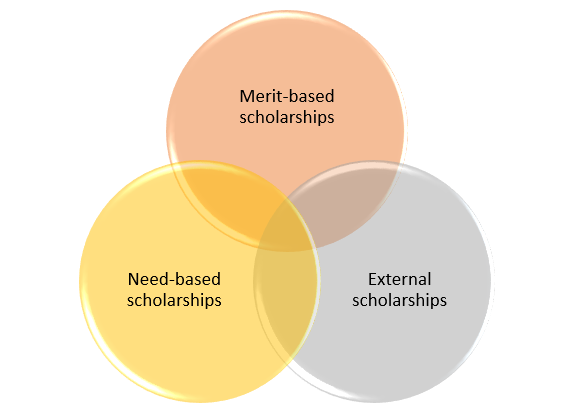
Majorly there are three types of scholarships
- Merit-based scholarships
- Need-based scholarships
- External scholarships
Students are often confused between merit-based or need-based scholarships. We have simplified this and explained below the difference between both scholarships. Candidates must also be aware of the eligibility and criteria for applying to need-based and merit-based scholarships.
Merit-based scholarships
Merit-based scholarships are granted to students with excellent academic records or students having extraordinary achievements in extracurricular activities or sports. Here, the financial background of a student does not hold much relevance. There are various universities and educational institutes that offer MBA scholarships for Indian students.
Need-based scholarships
Need-based scholarships are given to students with less privileged backgrounds. Students with good academic records but having financial difficulty in meeting their tuition fees for higher education. We have given a list of GMAT scholarships below offered by top business schools.
General/External scholarships
Many agencies and organizations offer MBA scholarships to students. Many organizations also provide scholarships to MBA graduates. Students should know their GMAT scores for scholarships. Many colleges/universities offer scholarships to MBA aspirants based on their GMAT scores. So, candidates having good GMAT scores are rewarded by B-schools. However, this is not the case with every B-school.
MBA scholarships offered by top business schools
Below mentioned some of the scholarships and fellowships offered by top business schools globally to international Indian students.
- GMAT Cut Off for Top MBA Colleges in USA
- GMAT Preparation FAQs
- Preparation Tips for GMAT Quantitative (Quant) Section
- GMAT Math Prep FAQs
| Universities | Type and name of Scholarships |
|---|---|
| Harvard Business School | Need-based fellowships |
| Columbia Business School | The McGowan Fellowship Fund |
| Chicago Booth |
|
| Dartmouth Tuck | Need-based fellowships |
| Oxford Saïd Business School | Need-based fellowships |
| London Business School | Need-based fellowships |
| Oxford & Cambridge Society of India | OCSI Scholarship for Indian Students |
| MIT Sloan | Need-based fellowships |
| INSEAD | Need-based fellowships |
Some of the top B-schools offering different types of scholarships for international and Indian students:
Stanford Graduate School of Business
The Stanford Reliance Dhirubhai Fellowship: It is awarded to up to five students and covers the tuition and fees for the two-year program. Within two years of pursuing the MBA at the Stanford Graduate School of Business, the beneficiaries are required to return to India for two years and work for an Indian organization.
Related post
- Preparation Tips for GMAT Quantitative (Quant) Section
- GMAT Math Prep FAQs
- Business Schools without GMAT requirement
- MBA Colleges in Australia that don’t Require GMAT
- MBA in Australia without GMAT FAQs
- GMAT Sample Papers
- Premium GMAT Study Collection
- GMAT Sample Questions: Analytical Writing SectioC
- GMAT Sample Questions Verbal Skills Section
- GMAT Verbal Preparation Tips: How to Improve GMAT Verbal Score
- Free GMAT Practice Questions
Wharton School of Business
- Emerging Economy Fellowships: As the name suggests, this scholarship is designed for talented students from emerging economies. Students who got admission into the Wharton MBA program are automatically considered for this scholarship. It includes funding for the two-year MBA program.
- Social Impact Fellowships: Students need to showcase leadership in non-profit organizations. It strengthens the leadership, operational and strategic skills of the graduates and undergraduate students. This program aims to make a positive impact in the world.
- Joseph Wharton Fellowships: This scholarship is named after the founder of the Wharton school of business, i.e., Joseph Wharton. all students who got admitted to Wharton are eligible for this scholarship. It is awarded to students with exemplary professional, personal, and academic records.
Booth School of Business
- The Zonis Fellowship: It is awarded to students from emerging economies. Students who have achieved excellent academic, extracurricular, and leadership achievements are eligible for this fellowship.
- Akhtarali H. Tobaccowala Fellowship: Those students who want to pursue a full-time MBA program from Chicago Booth School of Business and are based in India are awarded this fellowship. This scholarship was created for Indian students after a donation of $1 million by the Tobaccowala foundation.
Harvard Business School
- Horace W. Goldsmith Fellowship: This scholarship was established in 1988 by Horace W. Goldsmith. The recipients of this scholarship should have worked in a non-profit organization before applying for this fellowship. It is awarded to 7-10 students who are willing to join the non-profit sector after completing their studies from Harvard Business School. The $10,000 fellowship is given to the first year MBA students.
- The Robert S. Kaplan Life Sciences Fellowship: It is awarded to ten students who want to work in the life sciences. The $20,000 scholarship is given at the time of admission, preferably to the students who want to work in a science-related organization.
- HBS Fellowship Programs: It is a need-based fellowship awarded to the aspirants who have minimal financial resources to pursue higher education.
Haas School of Business
Dr. Tahir Fellowships: The $40,000 scholarship is preferably awarded to students who completed their undergraduate studies in Asia and are now planning to pursue a full-time MBA from Haas Business School.
Conclusion
Securing a GMAT-based scholarship is a strategic endeavor. By targeting a competitive score, applying to schools where your profile aligns with their mission, and tapping into India-specific external fellowships, you can significantly reduce the financial burden of your MBA. Remember that while the GMAT opens the door, it is your overall profile and the compelling narrative of your future goals that will ultimately secure the funding.
Similar posts;
- Premium GMAT Study Collection
- Preparation Tips for GMAT Quantitative (Quant) Section
- GMAT Math Prep FAQs
- Business Schools without GMAT requirement
- MBA Colleges in Australia that don’t Require GMAT
- MBA in Australia without GMAT FAQs
- GMAT Sample Papers
- Premium GMAT Study Collection
- GMAT Sample Questions: Analytical Writing SectioC
- GMAT Sample Questions Verbal Skills Section
- GMAT Verbal Preparation Tips: How to Improve GMAT Verbal Score
- Free GMAT Practice Questions