
How to improve your GMAT scores to get into better colleges; www.gmac.com
If you are working full-time and preparing for GMAT, you will need to manage your office work in a way so that it does not affect your study time. You also have to keep an eye on the free time you normally devoted to leisure activities such as TV, meeting friends, travelling etc.
So the main question remains unanswered: How do you score well in GMAT without having lots of free time dedicated to practicing concepts and theories? Here are a few tips if you will be studying for the exam entirely on your own and not taking any coaching classes.
1. Familiarize yourself with the test content – According to statistics given out by GMAC, about 30% of the test takers put in four to six weeks of preparation time, and 18% put in seven to nine weeks of preparation time. That shows that majority of test takers put in at least four weeks to prepare for the exam. It is obvious that students who put in more hours studying for the GMAT tend to do better on it.
2. Get your hands on the GMAT official guide – As a first step, buy the GMAT Official Guide (OG), to make yourself familiar with the topics and subjects you will need to study.
3. Estimate preparation time required – Try to estimate the amount of time you need to prepare each topic thoroughly. Those who are recent graduates might need less time and those who are working might need more. Estimate the number of hours you need every day.
4. Estimate practice time – GMAT is not the test you can ace by memorizing the concepts without practicing them through practice. The GMAT Official Guide, and other official guides for each sections will help you practice every day. In addition, you will need 10 hours to go through the practice tests called GMATPrep, and additional 5 hours to go through the practice questions in the software.
5. Review other prep material too – If you are also using extra reference material, then make sure that you take into account the approximate time you will need to review the material.
6. Make a study schedule – Once you know how many hours and days you need to study, map out a schedule around that. Figure out what time of the day you will be studying and keep a firm schedule around it. Block these hours and don’t allow any room for distractions. Discipline is very important characteristic required to prepare for GMAT.
7. Start with the basics first – you need to understand the basics of each topic before you get into finer details. Many people will give you the advice that you should take your GMATPrep test at the beginning to know where you stand. You should, rather, take the first GMATPrep test when you are comfortable with 80% of the topics. Not taking the practice exam too early will ensure that you don’t get discouraged early on
8. After preparation, take lots of tests – Use the GMATPrep software to retake tests and make sure you have gone through most of the questions. As you take more tests, you will become familiar with the experience and that will automatically decrease your nervousness.
9. Keep the last 2-3 days just for revision – your last phase of revision should be used to strengthen weaker areas and to practice questions related to them. You should also relook at material you are less confident about.
Mastering the GMAT: A Comprehensive Guide to Achieving Your Target Score
The Graduate Management Admission Test (GMAT) is more than just a test of academic knowledge; it is a rigorous assessment of your analytical reasoning, problem-solving abilities, and time management skills. For many aspiring MBA candidates, the journey to a high GMAT score is a marathon, not a sprint.
Improving your score requires a disciplined, data-driven approach that moves beyond simple memorization and toward a deep understanding of how the test is constructed.
1. Establish Your Baseline
Before diving into study materials, you must understand your starting point.
-
Take an Official Practice Exam: Download the free official GMAT software from GMAC (the makers of the test). Take a full-length, timed practice exam under realistic conditions.
-
Analyze Your Results: Do not just look at your score. Review every question you missed—and more importantly, review the questions you got right by guessing. Identify whether your errors are due to a lack of content knowledge (e.g., forgetting a geometry formula) or process failure (e.g., misreading the question or running out of time).
2. Master the Fundamentals
The GMAT is designed to reward those who understand the “how” and “why” behind the math and grammar.
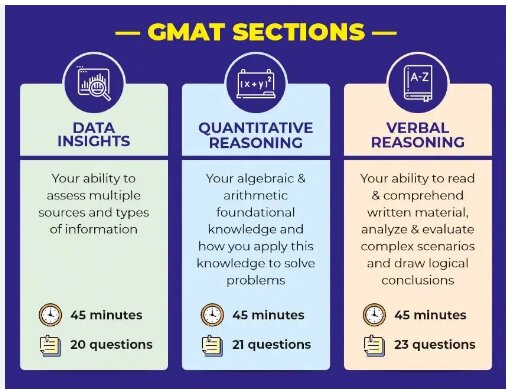
Quantitative Reasoning
-
Back to Basics: The GMAT tests math at a high-school level but requires sophisticated application. Ensure you are rock-solid on arithmetic properties, exponent rules, algebra, and geometry.
-
Data Sufficiency Mastery: This is the most unique part of the GMAT. Stop trying to find the value of a variable and start focusing on whether you have enough information to answer the prompt.
Verbal Reasoning
-
Critical Reasoning: Focus on the structure of arguments. Learn to identify the premise, the conclusion, and the underlying assumption. The correct answer choice almost always acts as a “bridge” that validates the assumption.
-
Sentence Correction: The GMAT tests standard written English. Focus on grammatical rules like parallelism, modifier placement, and verb tense consistency. Avoid “ear-testing” (choosing what sounds right) and rely on rigorous grammar rules.
3. Develop Strategic Test-Taking Habits
Many students fail to reach their potential because they approach the GMAT like a traditional school exam.
-
The Art of Guessing: You cannot skip questions on the GMAT, and the penalty for not finishing a section is severe. Learn when to cut your losses. If you have spent more than three minutes on a problem with no progress, make an educated guess and move on.
-
Time Management: Use a “pacing strategy.” Divide your test sections into blocks of questions. If you are behind by more than a few minutes at the end of a block, you must accelerate your pace to ensure you reach the final questions, which carry as much weight as the early ones.
-
Error Logging: This is the single most effective way to improve. Keep a spreadsheet of every practice question you get wrong. Note the topic, why you missed it, and what strategy you will use to avoid that trap next time. Review this log weekly.
4. Curate Your Study Environment
Consistency is the primary driver of score improvement.
-
Create a Study Schedule: Treat your prep like a part-time job. A consistent two hours a day is significantly more effective than one ten-hour cram session on Sunday.
-
Simulate Exam Day: As your test date approaches, take at least 3–4 full-length practice tests. Complete them in the morning, at a desk, with no distractions, and follow the official break times. This builds the mental stamina required for a three-hour exam.
- New GMAT Feature Allows Students To Choose The Order Of Sections
- New Feature on GMAT: Preview Your Scores
- Top Strategies for Getting a Perfect 800 GMAT Score
- GMAT Scholarships for Indian Students: Everything You Need To Know
5. Overcoming the Plateau
If your score has stalled, you likely need a shift in strategy:
-
Change Your Resources: If a specific prep book or course isn’t working, try a different style of explanation (e.g., switching from a video-based course to a tutor, or vice-versa).
-
Focus on “Low-Hanging Fruit”: Often, students focus on their hardest topics. However, you can raise your score faster by ensuring you never miss a “medium” difficulty question again, rather than stressing over the “hardest” 700+ level questions.
Note: The GMAT is an adaptive test. The difficulty of the next question depends on how you answered the previous one. Do not panic if the questions seem to get harder—that is actually a sign that you are performing well and are on track for a high score.
Recommended Study Routine
| Phase | Focus Area | Goal |
| Phase 1 | Content Review | Master core concepts and formulas. |
| Phase 2 | Practice Sets | Apply concepts to mixed-difficulty questions. |
| Phase 3 | Full Simulations | Refine timing and mental endurance. |
| Phase 4 | Final Review | Focus on Error Log and weak points. |
By treating your GMAT preparation as a deliberate, iterative process of identifying and correcting your mistakes, you can move from a good score to an elite one. Consistency, patience, and a deep understanding of your own thought process are your greatest assets.
Similar posts;
- Premium GMAT Study Collection
- Preparation Tips for GMAT Quantitative (Quant) Section
- GMAT Math Prep FAQs
- Business Schools without GMAT requirement
- MBA Colleges in Australia that don’t Require GMAT
- MBA in Australia without GMAT FAQs
- GMAT Sample Papers
- Premium GMAT Study Collection
- GMAT Sample Questions: Analytical Writing SectioC
- GMAT Sample Questions Verbal Skills Section
- GMAT Verbal Preparation Tips: How to Improve GMAT Verbal Score
- Free GMAT Practice Questions