
Mastering the GMAT Quantitative Section: A Comprehensive Guide
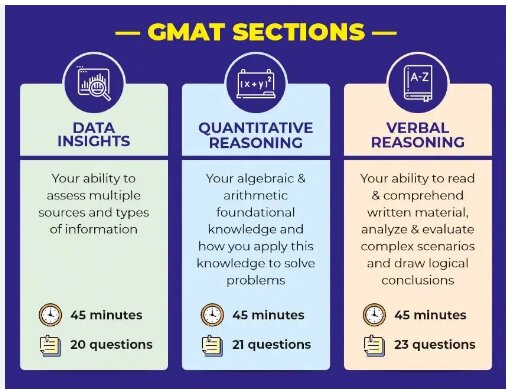
The GMAT Quantitative (Quant) section is a rigorous test of your mathematical reasoning, analytical skills, and logical deduction. While it covers core mathematical concepts, the GMAT is not merely a test of your high school algebra or geometry knowledge; it is a test of your ability to apply these concepts to solve complex, real-world problems under significant time pressure.
To excel in this section, you need a strategy that balances conceptual mastery, strategic test-taking techniques, and disciplined time management.
You may also like;
- GMAT Colleges
- How to improve your GMAT scores to get into better colleges
- GMAT Score for MBA in Canada
- New GMAT Feature Allows Students To Choose The Order Of Sections
- New Feature on GMAT: Preview Your Scores
1. Understand the Exam Structure
Before diving into problem sets, it is crucial to understand exactly what you are facing.
-
Duration: You have 62 minutes to complete 31 questions.
-
Question Types: The section consists of two primary formats:
-
Problem Solving: Standard multiple-choice questions requiring you to find the correct numerical or algebraic value.
-
Data Sufficiency: A unique GMAT format that asks not for the answer to a problem, but whether you have enough information to solve it. These require a high level of logical reasoning.
-
-
Content Coverage: The syllabus focuses on three pillars: Arithmetic, Algebra, and Geometry.
2. Build a Rock-Solid Mathematical Foundation
Many candidates falter not because they cannot do math, but because their fundamentals are rusty.
-
Brush Up on Basics: Revisit core concepts like number properties, ratios, percentages, exponents, and quadratic equations.
-
Focus on Logic, Not Memorization: The GMAT rarely rewards rote memorization. Instead, focus on understanding why a formula works. When you understand the logic, you can derive formulas even if you forget them during the high-stress environment of the actual test.
3. Master Data Sufficiency
Data Sufficiency is often the most intimidating part of the Quant section for new test-takers.
-
Adopt a Process: Treat every Data Sufficiency question as a binary check: “Does Statement 1 alone work? Does Statement 2 alone work? If not, do they work together?”
-
Avoid Assumptions: One of the most common pitfalls is assuming values (e.g., assuming a variable must be an integer when it could be a fraction). Always consider extreme cases: zero, negatives, and non-integers.
4. Strategic Time Management
With roughly two minutes per question, time is your scarcest resource.
-
The 2-Minute Rule: If you find yourself stuck on a problem for more than two minutes, make an educated guess, flag it, and move on. Getting “bogged down” on one hard question can ruin your pacing for the entire section.
-
Practice Under Constraints: Never solve practice problems without a timer. Your goal is to develop an internal clock that alerts you when you are spending too much time on a single task.
5. Identify and Target Your Weaknesses
Standardized testing rewards self-awareness.
-
Error Logs: Maintain an “error log.” When you get a question wrong, document why. Was it a calculation error, a conceptual gap, or a failure to read the prompt carefully?
-
Focus on Patterns: If you consistently miss questions on “Work/Rate” or “Probability,” stop doing general practice and dedicate a week exclusively to those sub-topics.
6. Simulate the Real Environment
The transition from a relaxed study environment to the high-stakes test center is jarring.
-
Take Full-Length Practice Tests: Use official GMAT prep materials to take complete, timed practice exams. This builds the mental stamina required for the full duration of the test.
-
Review Performance: The most important part of a practice test is not the score, but the review. Re-do every question you got wrong without looking at the answer key first.
7. Seek Expert Guidance
If you find yourself hitting a plateau, don’t hesitate to seek outside help.
-
Mentorship: A tutor or coach can help identify “blind spots” in your logic that you might miss on your own.
-
Structured Courses: If you struggle with discipline, a formal GMAT prep course can provide the accountability and structure needed to stay on track.
Preparation Tips for GMAT; www.gmac.com
The Quantitative section of the GMAT measures basic mathematical skills. It tests a candidate’s understanding of elementary concepts in mathematics learned at school and the ability to reason quantitatively. The section involves solving quantitative problems, reasoning using quantitative techniques, and interpreting graphic data.
Although one needs to have good mathematical skills to solve the questions in the Quants section, however, the mathematics that one needs is taught in secondary school. In this article, we have given preparation tips for GMAT quantitative section, so that you can prepare better for the quants section.
Test Section Duration: 75 minutes
Format: 37 questions
Tests: Problem Solving and Data Sufficiency
The Quantitative section consists of two question types.
- Problem Solving Problem-solving questions are standard 5-choice multiple-choice questions.
- Data sufficiency questions consist of a question followed by two statements. Your job is to decide whether the information in the statements is sufficient to answer the question. These questions require much less calculation than standard problem-solving.
GMAT Math Section: Skills Required
-
Ability to reason quantitatively, solve quantitative problems, and interpret graphic data
-
Understanding problems involving arithmetic, elementary algebra, and common geometry concepts
-
Evaluation of the amount of information needed to solve quantitative problems
-
Analyzing a quantitative problem
-
Recognizing which information is relevant
-
To be able to determine at what point there is sufficient information to solve a problem
Tips for Problem Solving Questions
Problem-solving questions test your ability to use logical and analytical reasoning to solve quantitative problems. Candidates need to solve the problem and mark the answer from the given choices.
- Increase speed: Keep on checking the screen-timer during the test. Do not waste too much time on a problem you are not able to solve and move to the next question. Try to finish the complete section.
- Read every question carefully: Read every question carefully to understand the given data and what is being asked. read every sentence carefully and translate the data into equations to solve the problem.
- Use the erasable board: Use the erasable notebaord given at the test center. Solving the questions in writing may help you in getting the right answers and avoid mistakes.
- Take a glance at the answer choices: Before giving the answer go through the options given for the answer. Else, you may spend time on getting an answer that is not given in the choices.
- Do not focus on one question for too long: If a question is taking too much time then move to the next one. Check out the choices and eliminate the ones you think are wrong and select the best option and move to the next question.
Tips for Data Sufficiency Questions
Data Sufficiency tests your ability to analyze a quantitative problem, recognize which data is relevant, and also determine at what point is there enough data to solve the given problem.
- Check whether the problem allows a range of values or only one value: You only have to determine whether you have enough data or not.
- Avoid unwarranted assumptions based on geometric figures: It is not necessary that figures be drawn to scale.
Related post
- Preparation Tips for GMAT Quantitative (Quant) Section
- GMAT Math Prep FAQs
- Business Schools without GMAT requirement
- MBA Colleges in Australia that don’t Require GMAT
- MBA in Australia without GMAT FAQs
- GMAT Sample Papers
- Premium GMAT Study Collection
- GMAT Sample Questions: Analytical Writing SectioC
- GMAT Sample Questions Verbal Skills Section
- GMAT Verbal Preparation Tips: How to Improve GMAT Verbal Score
- Free GMAT Practice Questions
GMAT Math Prep: Important Topics
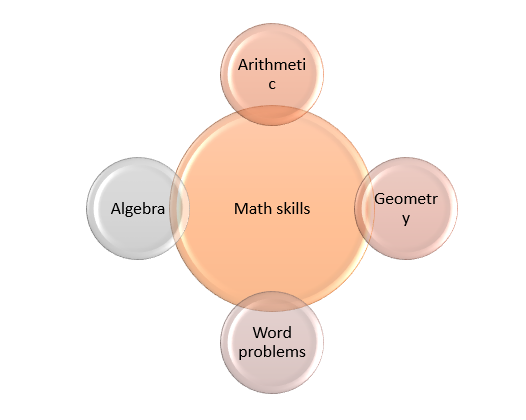
One needs to have basic mathematical skills to solve the Quantitative Reasoning Section of the GMAT exam. Some of the areas where you need to focus and increase your Maths knowledge are
- Arithmetic – basic arithmetic including fractions, statistics, integers, and probability, and powers and roots
- Algebra – how to solve different types of equations and topics like variables and functions
- Geometry – properties of geometric objects, including triangles, circles, quadrilaterals, solids, and cylinders
- Word problems – geometric principles to solve problems, blending arithmetic, and algebraic
GMAT Quantitative Tips
- Know math formulas before you take the GMAT.
- Make sure to prepare a list of formulae during the course of your preparation. These formulae must be revised on a daily basis
- Take advantage of your scrap paper. Use it to draw pictures, work out formulas, and cross out wrong answer choices.
- Since you will not need the keyboard for the Quantitative section, move it aside to give you more desk room for writing on your rough paper.
- Advanced topics such as trigonometry and calculus are not tested on the GMAT. To score well, you only need to be familiar with school-level arithmetic, geometry, and algebra.
- Do not rely on your visual judgment to answer geometry questions. One common mistake is to assume that 2 lines must form a right angle, when this is not stated anywhere in the text.
- Spend at least 30 seconds reviewing the diagrams. Many facts can be drawn from the illustrations.
- Similarly, spend 30 seconds reviewing the graphs and tables. Graph problems are supposed to test your ability to interpret and use graphs and tables and do not require hard calculations.
- However, you can rely on visual estimates for bar graphs and line charts. The test writers will not use visual tricks on these questions.
- Learn how to work backwards. If you are completely stuck on a question, you can select an answer choice and work backwards to see if it makes sense.
- Do not rush through the easy questions and make careless mistakes.
- Eliminate answer choices that do not make sense.
GMAT Math Prep Sources
Those who have engineering background should not be too overconfident about this section. You never know what question might pop up on the test. It is much better to prepare for every section. We have mentioned a list of basic books that you must practice in order to score well on this section:
- GMAT Official Guide: The importance of this GMAT official guide is unparalleled. It contains the actual questions that have appeared on the GMAT. You must practice this book cover-to-cover.
- Manhattan GMAT Guides: Manhattan GMAT books are extremely detailed and are a must-have for any GMAT candidate.
- Manhattan GMAT Advanced Quant: Do not shy away from this book. It contains really good questions for practice. Once you are done with the base books, you must solve this one as well.
- CAT Formulae: You must make short notes of formulae from CAT books. Since CAT quantitative aptitude section is tougher that GMAT, it will be helpful for the students to solve GMAT questions with ease.
Final Thoughts
Success in GMAT Quant is an iterative process. It requires consistent, daily practice and the humility to learn from your mistakes. By focusing on fundamental concepts, refining your Data Sufficiency logic, and mastering your timing, you can confidently approach the exam and achieve the score you need to reach your target business school.