
Introduction to Mini GMAT
The Graduate Management Admission Council (GMAC) recently launched a new product called the Executive Assessment (EA) or mini GMAT, which is designed specifically for Executive MBA courses. It serves a different purpose than the GMAT.
EMBA programs don’t have the compulsory criteria of a standardized test. Since the candidates for executive MBA typically a lot more work experience than regular MBA applicants, they are not in touch with academic classroom experience and have less time to take a standardized test. EA GMAT provides an option that may have an easier path.
Six top-tier Executive MBA schools across the world have begun accepting the new Mini GMAT for admission to the Executive MBA course, namely –
- CEIBS (China European International Business School), China
- Chicago Booth, US
- Columbia Business School, US
- University of Hong Kong Business School, Hong Kong
- INSEAD, France
- London Business School, UK
GMAC expects the Mini GMAT to become the required standardized test at rest of b-schools a year from now.
Difference between Mini GMAT and GMAT
The content and syllabus of Mini GMAT are relevant to executives in terms of increased focus on critical thinking, problem-solving and analysis, rather than pure mathematics and grammatical structures. The duration of the exam is also short, lasting only 90 minutes compared to three and a half hours of GMAT.
You May also like:
- IELTS Registration (How to Book a Test)
- IELTS Exam Dates FAQ
- How to Choose IELTS Test Dates
- How to Send IELTS Scores to Colleges
Mini GMAT Format
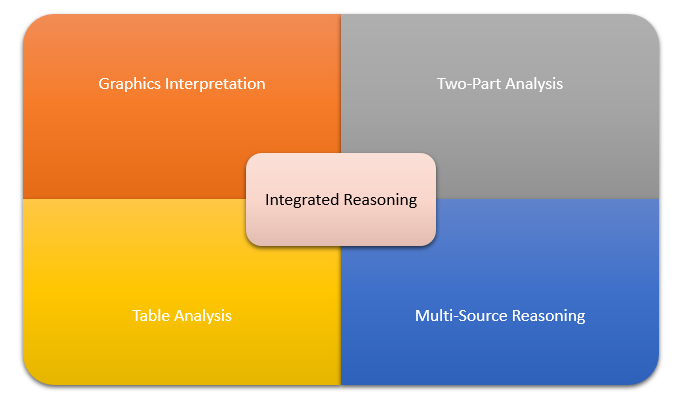
The format of Mini GMAT includes 40 questions in total, which are divided into three sections—Integrated Reasoning, Math and Verbal. All three sections last for 30 minutes each.
| Sections | No. of Questions | Question Types | Score |
| Integrated Reasoning | 12 | This section include questions similar to questions asked in the GMAT Exam | 0-20 |
| Verbal | 14 | Questions related to critical reasoning are similar to the GMAT ExamQuestions related to sentence correction are shorter in comparison to the questions in the GMAT Exam | 0-21 |
| Quant | 14 | Statistics, Fractions, Percentage, Number Properties, Story Problems | 0-20 |
| Total | 40 | Score is considered all the three sections | 100-200 |
The new exam can be taken at the same test centers across the world where the GMAT is also being offered. However, you will have to be careful while taking the Mini GMAT, as you are allowed to take the exam only two times in your lifetime.
Reasons behind the introduction of Mini MBA
Experts in the field, however, have their own speculations about the reason behind the appearance of this new exam. According to John A. Byrne, author at Poets and Quants, GMAC is concerned about losing the market share from business schools since they don’t ask for GMAT scores to get admitted to their Executive MBA courses. Now GMAC has recruited select six business schools for an experimental run of Mini GMAT.
In recent years several b-schools have dumped GMAT scores as an admission requirement to Executive MBA. Many b-schools felt GMAT was not an accurate predictor of success for Executive MBA students. As a result, GMAC is hoping to convince other colleges and to bring back some of those colleges that don’t have GMAT scores as a requirement.
Related Posts:
- IELTS Exam Registration
- IELTS Registration FAQs
- IELTS Exam
- Eligibility Criteria for IELTS Exam
- IELTS Eligibility FAQs
- IELTS Test Dates
- IELTS Exam Date FAQ
- IELTS Test Centres
- IELTS Slot Booking
- IELTS Exam Pattern
- IELTS Exam Pattern FAQs
- IELTS Syllabus
- IELTS Preparation Tips
Master the Test: Introduction to Mini GMAT Questions
Preparing for the Graduate Management Admission Test (GMAT) can feel like a full-time job. With long sections covering advanced quantitative logic, data insights, and verbal reasoning, sitting down for a full-length diagnostic practice test right at the start of your revision can be incredibly overwhelming.
That is exactly why Mini GMAT questions have become a secret weapon for top-scoring business school applicants.
Whether you are trying to squeeze in a quick study session during your lunch break, or trying to understand the baseline logic of the exam without losing half your day, micro-quizzes offer the perfect solution. Let’s dive into what Mini GMAT questions are, why they are effective, and how you can use them to build your study rhythm.
What Exactly Are Mini GMAT Questions?
A “Mini GMAT” is a condensed version of the actual GMAT exam. While the standard test takes over two hours to complete, a mini practice set typically consists of 5 to 10 high-yield questions designed to be completed in 10 to 20 minutes.
These questions are not “easier” versions of the real exam; rather, they are actual, authentic-style GMAT questions scaled down in volume. A standard mini-quiz will usually pull a couple of questions from each core section of the current GMAT Focus Edition:
-
Quantitative Reasoning: Problem-solving questions assessing algebra, arithmetic, and number properties.
-
Verbal Reasoning: Critical Reasoning and Reading Comprehension prompts evaluating arguments and textual analysis.
-
Data Insights: Data sufficiency, table analysis, graphics interpretation, and multi-source reasoning.
If you are an international applicant looking to take the GMAT alongside language exams, balancing your preparation time is critical. Make sure to check out our comprehensive guide on how to register for and pass the IELTS exam to streamline your entire admissions timeline.
Why Mini GMAT Questions Are a Game Changer
Many test-takers fall into the trap of thinking they can only study if they have a clear 3-hour block of time. In reality, consistent, bite-sized practice often yields far better retention. Here is why incorporating mini-questions into your routine works so well:
1. Eliminates Cognitive Fatigue
Staring at complex data charts for hours causes mental burnout, leading to silly mistakes. By keeping your practice sets short, you train your mind to bring maximum concentration to each individual question.
2. Precise Diagnostic Power
If you take a full mock exam and score poorly, it can be tough to pinpoint exactly where you went wrong. A focused 5-question mini-quiz on a specific sub-topic (like probability or assumption-based critical reasoning) instantly exposes your conceptual weak points.
3. Accessible Mobile Studying
You can easily complete a mini GMAT set on your phone while commuting, waiting for an appointment, or during work breaks. It turns passive “dead time” into active score improvement.
How to Structure Your Mini GMAT Practice
To get the most out of mini questions, you cannot just answer them casually. You need to simulate real testing parameters. Follow this optimized routine to maximize your scores:
Transitioning From Mini Questions to the Full Exam
While mini GMAT questions are phenomenal for building foundational speed and accuracy, they are ultimately a stepping stone. As your accuracy rate in these micro-sets climbs past 75-80%, you must begin stitching these short sessions together into longer endurance blocks.
After all, the real exam requires physical and mental stamina. Use mini questions from Monday through Friday to keep your skills sharp, then dedicate Saturday mornings to tackling full-length practice tests.
Pro Tip: Your performance on mini GMAT sets depends heavily on your overall reading speed and comprehension under pressure. If you are preparing for multiple international exams simultaneously, utilizing structured templates can take off the edge. Explore our guide on mastering academic essays and writing formats to sharpen your textual analysis skills before test day.
- 15+ Tuition Fee Scholarships offered by Universities for International Students
- 10 Distance Learning Scholarships & Tuition
- Top 10 International Scholarships for Women
- 10+ Scholarships in Australia for International Students
- Top 50 International Scholarship Programs Offered Annually
- Top 10 Science, Engineering, Technology Scholarships for Foreign Students
- Top 15 Bachelor’s Degree Scholarships for International Students
- Top 10 International Scholarships for African Students